
Four broods a year, no winter slowdown, and one quiet stretch of the calendar almost nobody uses. Here is the pigeon year as the birds actually run it.
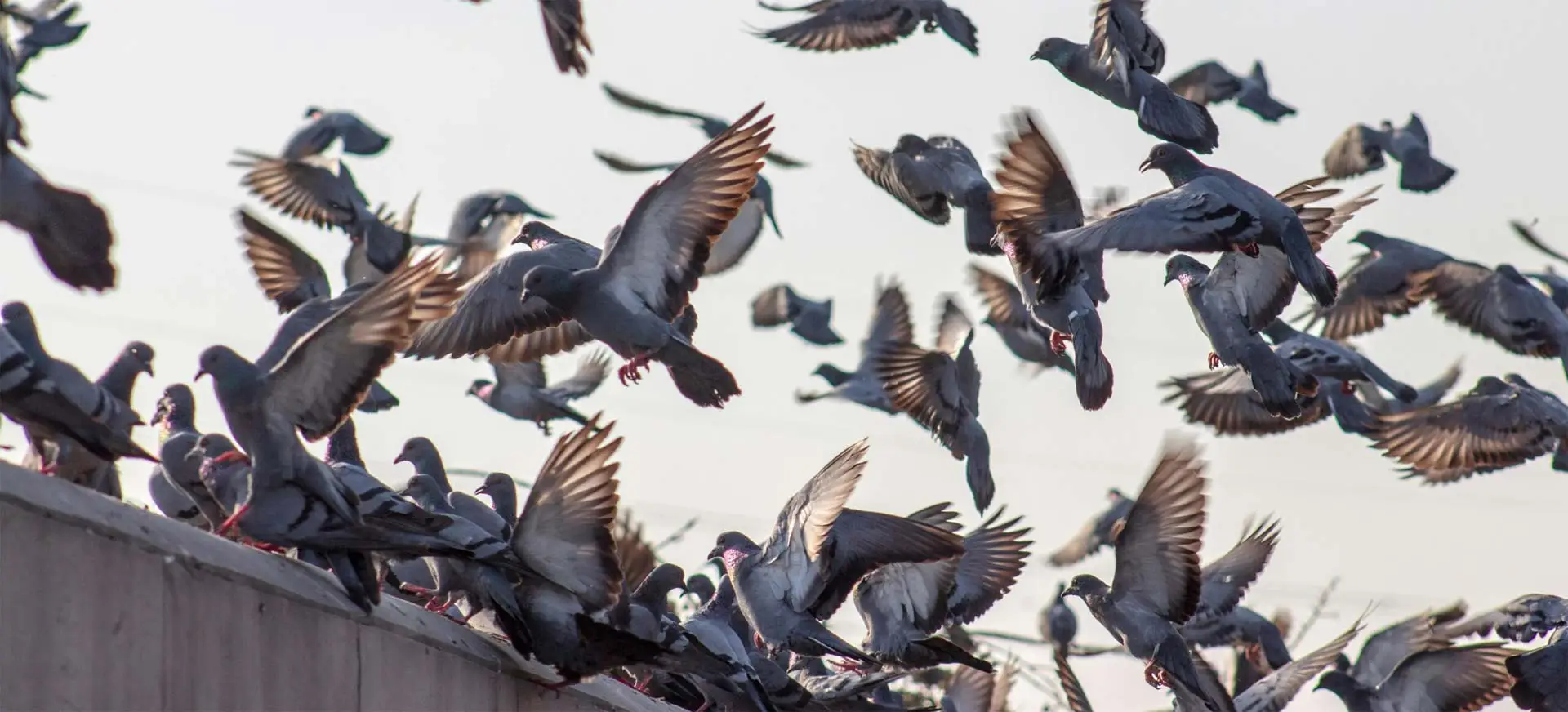
Somewhere on your street, a pair of pigeons is already three weeks into a plan for your roof. They have checked the tile line, tested the gap under the solar array, worked out where the nearest water sits and clocked which neighbor leaves dog food on the patio. None of that is random. Pigeons run on a rhythm that repeats every year in the Valley, and once you know the rhythm you stop reacting to a bird problem and start getting ahead of one.
Most property owners meet that rhythm at the worst possible point, usually in the middle of summer when the mess is already visible from the driveway. By then the birds have raised at least one brood and are working on the next. The same job, handled in a different month, is faster, cheaper and far less unpleasant. What follows is the year as a pigeon experiences it in Phoenix and the West Valley, and where your best openings sit inside it.
In most of the country, cold weather does half the work for you. Nesting slows, flocks contract, and a property gets a genuine break. Arizona offers no such thing. Rock doves, the species behind almost every pigeon complaint here, breed whenever food and shelter allow it, and our winters are mild enough that they rarely stop. A pair can produce four to six broods in a year, with roughly a month from egg to fledgling, which means a single pair on your roof in February can be a dozen birds by autumn.
Heat is the other factor people underestimate. From May onward, shade becomes the scarcest resource in the desert, and the shaded pocket beneath a solar array or the cavity behind a tile course is genuinely cooler than open roof surface. Birds are not choosing your property because they like the color of your stucco. They are choosing it because it solves a physical problem for them.
The calendar below is not a rule with a stopwatch behind it, but it holds up well across residential and commercial jobs alike. Knowing roughly where you sit in it tells you how urgent your situation is and how much work the fix is likely to involve.
This is the quietest stretch and the most useful one. Flocks are smaller, nesting is limited, and birds spend a good share of their time evaluating sites rather than occupying them. If you see two or three pigeons landing repeatedly on the same ledge or roof edge in February, you are watching a decision being made, not a nest being built.
Spring broods fledge and the flock size on any given block starts climbing. This is when a problem stops being theoretical. Birds that scouted in winter are now committed, and juvenile pigeons tend to stay close to where they hatched, which is why a property that had two birds in January can have ten by Memorial Day. Solar arrays fill up first because the space underneath is shaded, dry and out of reach of predators. Patio alcoves go next.
Work done in this window is still very manageable, but it usually includes clearing existing nests before anything gets installed. That adds time and cost compared to a winter job, though it is a fraction of what you will spend if you wait.
Summer is when the consequences arrive rather than the birds. Droppings that accumulated through spring bake onto tile, solar glass and painted metal in temperatures that turn them into a hard crust water will not lift. Monsoon storms then soak the nesting debris packed under panels and along parapets, and that wet organic material sits against roofing and wiring for days.
Three things tend to surface in this stretch:
Summer work is entirely doable, and our crews run it every year, but it is the least pleasant and most involved version of the job. Roof surface temperatures limit working hours, remediation is heavier, and repairs sometimes have to happen before proofing can be installed.
Autumn is quietly the best time to do this work, and it is the time of year we get the fewest calls. Breeding activity tapers, the flock is at its largest but least active, roof temperatures are workable all day, and the material accumulated over summer has not yet been through another season of buildup. Proofing installed in November has the entire following spring to prove itself before pressure peaks again.
The difference between a February job and an August job on the same house is not just comfort. It shows up in the scope of work and the invoice.
You do not need to track calendar dates to use any of this. You need to know which stage your property is in, and the evidence is usually visible from the ground if you know what you are looking at. Isolated droppings in one or two places, with no smell and no sound, generally means scouting. Streaking down a wall below a ledge, feathers on a patio and a distinct odor mean a nest is active nearby. Sound from above a ceiling means the birds are inside a cavity, which is a different and more urgent conversation.
What you cannot assess from the ground is the roof itself, and that is where most of the real evidence sits. The gaps at the first course of tile, the condition under a solar array and the state of the valleys are all invisible from a driveway and genuinely dangerous to inspect yourself on a hot Arizona roof. This is why every estimate we run starts with a free drone roof survey rather than a guess.
Everything above holds for homes. Commercial buildings follow the same biological calendar but feel it on a delay, because the pressure point is rarely the roof itself. It is the covered walkway, the loading dock, the sign band and the parking structure, and those get noticed when a customer or an inspector complains rather than when a homeowner walks outside with coffee.
Food access changes the math. A center with outdoor dining or a grocery entrance supports far more birds per square foot of ledge than a warehouse does, so spring population growth hits harder and earlier. Patios and entry canopies are usually the first areas that need attention, and they are also the areas customers photograph.
Open steel structure is the draw here, not food. Birds move into rafters, conveyor runs and dock canopies for shelter, and because those spaces are high and hard to reach, problems often go unaddressed until product or equipment below starts collecting droppings. The seasonal spike is less dramatic, but the cleanup cost per bird is higher.
Netting a large span usually happens in sections so operations keep running. That takes coordination and lead time, which is another argument for booking outside of peak summer when crews and lift equipment are in highest demand across the Valley.
Pigeons are consistent, which is inconvenient when you are the one with the roof and useful once you decide to plan around it. The birds sitting on your parapet in January are the reason you have a mess in July, and the mess in July is the reason you have a repair bill the following spring. Break that chain anywhere and the whole sequence stops, but breaking it early costs a fraction of breaking it late.
If you are reading this in the cooler half of the year, you are holding the best hand you will get. If you are reading it in August with droppings on the patio furniture, the situation is still entirely fixable, it just has more steps. Either way the fix is the same in principle: get eyes on the roof, close the openings properly with residential bird proofing or commercial netting, and make sure the work carries a warranty so that next year's cycle is somebody else's problem.
Free drone roof survey, humane removal, and proofing backed by a five year warranty across the Valley.